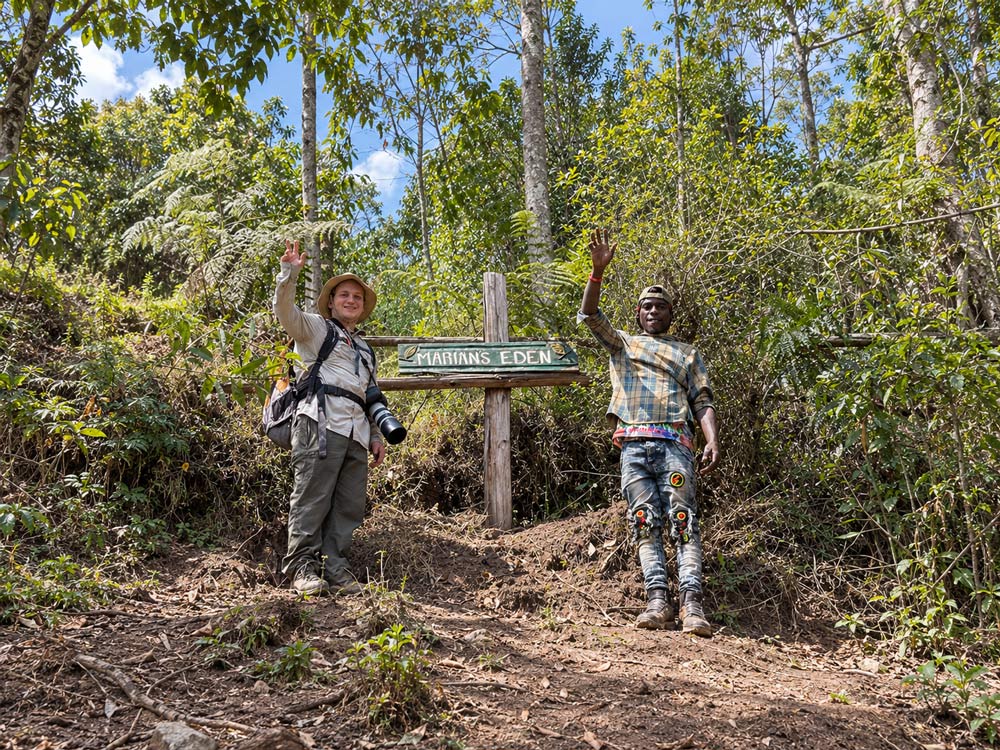
On the edge of Uganda’s Bwindi Impenetrable National Park, a former eucalyptus plantation is being transformed into a more diverse landscape of medicinal plants, food crops and coffee.
Marian’s Eden brings conservation, traditional knowledge and practical development together — creating a place that can grow useful plants, protect important knowledge and build new opportunities for the future.

Bwindi is one of Africa’s most ancient and biodiverse rainforests. It is also the ancestral home of the Indigenous Batwa people, whose lives, culture and knowledge were deeply connected to the forest.
When Bwindi became a national park in 1991, Batwa communities lost access to land and forest resources on which they had long depended. This included plants traditionally used for food and medicine.
Marian’s Eden cannot replace what was lost. It is a practical response to one part of that loss: creating space outside the national park where useful plants can be grown, cared for and passed on to future generations.
Africa’s Gift worked through local community champions to speak with Batwa elders about what they most missed from the forest.
The answer that came back most strongly was their medicines.
For generations, knowledge of forest plants had played an important part in Batwa life. Plants were gathered for everyday wellbeing, traditional remedies and cultural practices, with knowledge passed between generations.
That conversation became the starting point for Marian’s Eden’s pocket forest pharmacy.


The pocket forest pharmacy is a growing collection of medicinal and other useful plants established close to the communities it is intended to serve.
It creates a place where plants can be propagated and cared for outside the protected forest. Just as importantly, it provides an opportunity for knowledge about those plants to be maintained and shared appropriately.
This is not simply a planting project. It connects the natural landscape with the people who understand it.
The knowledge associated with the plants must remain with its holders. Batwa elders and local participants should determine what can be shared publicly, what should remain private and how the community benefits from any future educational or visitor activity.
Marian’s Eden was established on land previously used as a eucalyptus plantation.
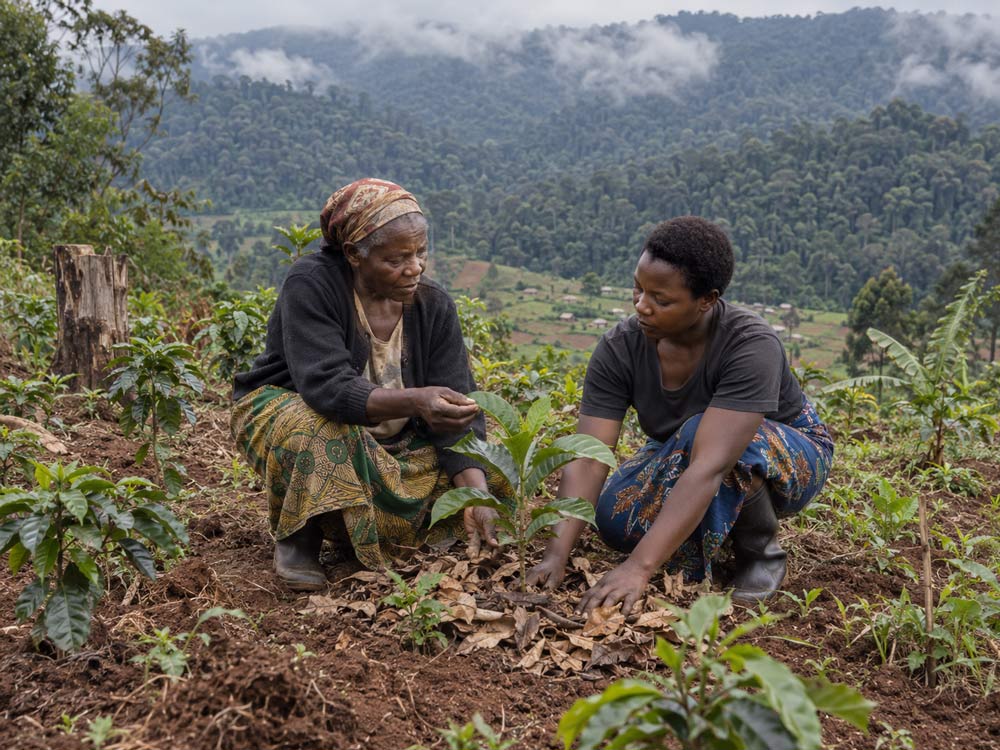
Non-native eucalyptus has been removed from part of the site to create space for a wider mixture of plants. The timber has been retained for possible use in the project’s future development rather than being discarded. The cleared ground has been mulched to protect the soil, conserve moisture and support new planting.
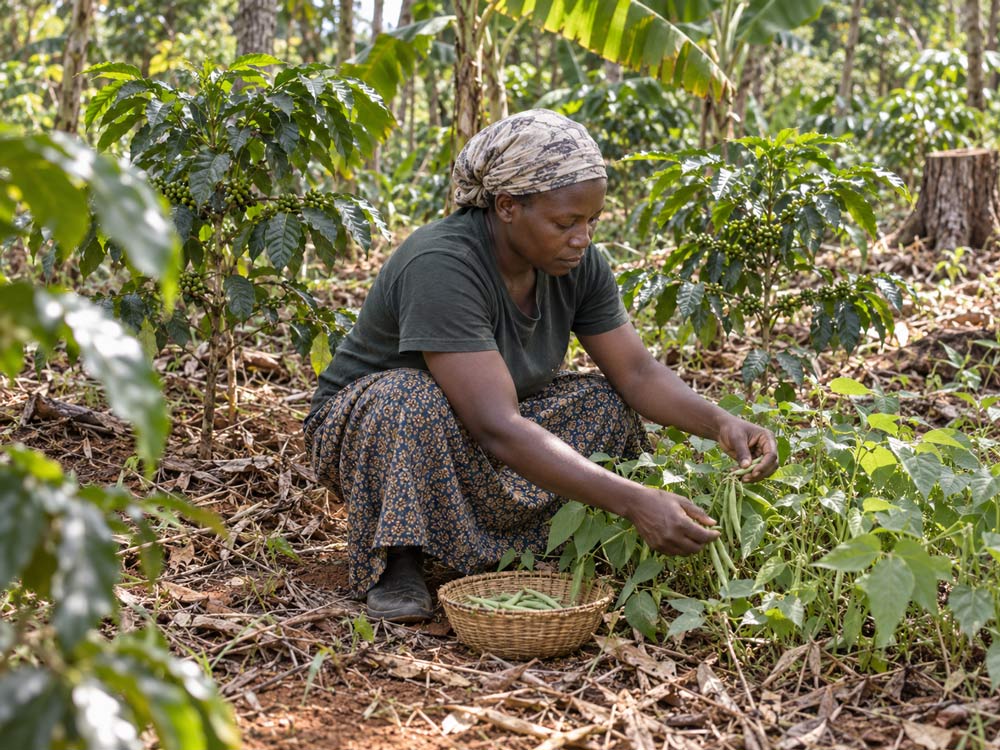
Medicinal plants now grow alongside food crops and coffee. Instead of relying on a single tree crop, the project is developing a layered growing system in which different plants can serve different purposes.
The aim is to create a landscape that is more varied, productive and useful to the people living around it.


Coffee forms an important part of the vision for Marian’s Eden. Rather than being grown as a separate plantation, it is planted among food, medicinal and other useful plants. This agroforestry approach allows several types of planting to share the same land.
Food crops can provide something useful in the shorter term, while coffee and longer-lived plants become established. Mulch protects the ground beneath them and organic material is returned to the soil.
Over time, coffee could also help Marian’s Eden generate income and become more financially sustainable.
During a visit in August 2023, members of Africa’s Gift worked alongside the local team to clear unwanted vegetation, mulch the ground and care for coffee and medicinal planting.
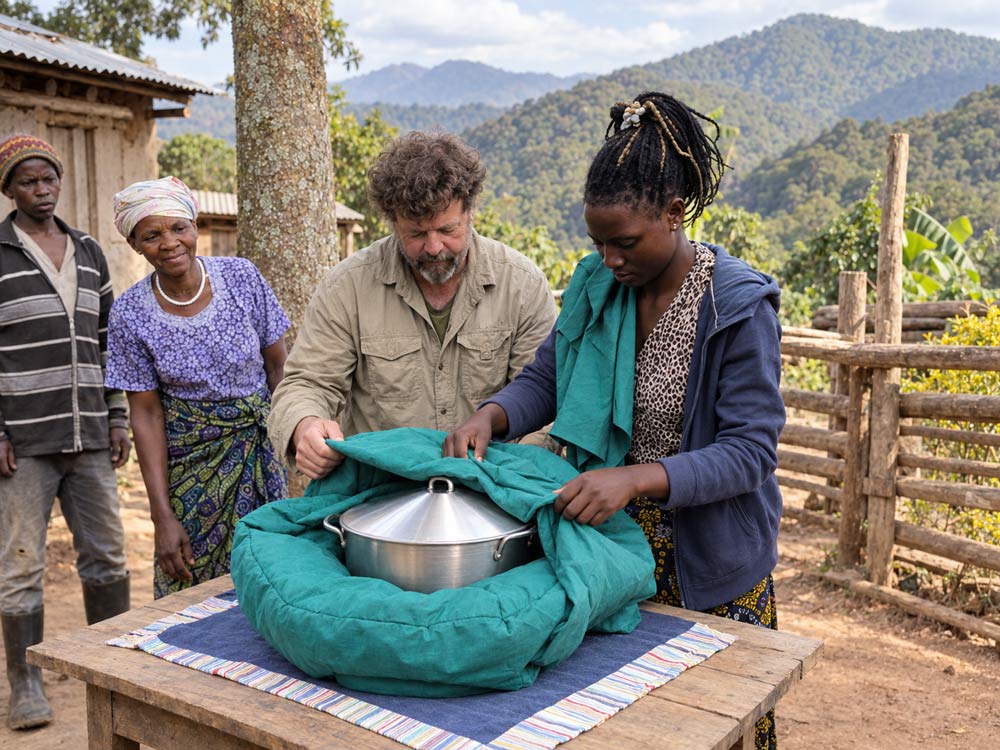
The visit also demonstrated how ideas can be shared between Africa’s Gift’s different partnerships. Lilian, the site manager at the time, used a template from Tanzania to make and successfully test an Eco Cook Bag at Marian’s Eden.


The next ambition for Marian’s Eden is to create a coffee terrace and a small reception and interpretation centre. Visitors would be able to see how coffee is grown, harvested and prepared before enjoying it on the land where it was produced — a genuine bean-to-cup experience.
The centre would also provide a place to tell the story of Marian’s Eden and explain the purpose of the plants growing nearby. Any information about traditional medicinal uses would be shared with the involvement and approval of the people who hold that knowledge.
The retained eucalyptus timber could be incorporated into the building, giving material removed during the land’s transformation a new and practical purpose.
The result would be more than a visitor attraction. It could create a meeting place, an educational resource and a potential source of income to help sustain Marian’s Eden into the future.
Marian’s Eden began with a simple question: what was most deeply missed from the forest?
The answer created a vision that now brings together medicinal plants, food growing, coffee, conservation and cultural knowledge.
Your support can help care for the planting already established and develop the next stage of the project — creating a place where knowledge is respected, visitors can learn and new opportunities can take root.

Every donation funds the soil, water, growing and cooking work in Lesotho, South Africa and Uganda — delivered by volunteers, with the communities that run each project.
A single donation, any amount.
Regular support lets projects plan ahead.
Get in touch to arrange a personal conversation about your wishes.