of households cannot afford a nutritious diet
Source: World Food Programme
Nutrition does not begin in the kitchen. It begins with the soil, the water available for growing, the variety of food within reach and the way each meal is prepared.
In Malealea, Africa’s Gift supports a connected, community-led approach that brings these elements together — from regenerating degraded soil and conserving rainfall to household gardens, practical education and locally made Eco Cook Bags.

Lesotho faces a complex nutrition challenge shaped by poverty, food insecurity, land degradation and an increasingly unpredictable climate.
Improving nutrition requires more than increasing the quantity of food available. It also means supporting varied diets, protecting the natural resources on which food production depends and making nutritious ingredients practical to prepare at home.
Source: World Food Programme
Source: UNICEF Lesotho
These are national figures, not measurements of Africa’s Gift’s impact. They show why practical, locally appropriate work connecting agriculture, food and cooking matters.
Africa’s Gift supports work addressing five connected parts of everyday nutrition.
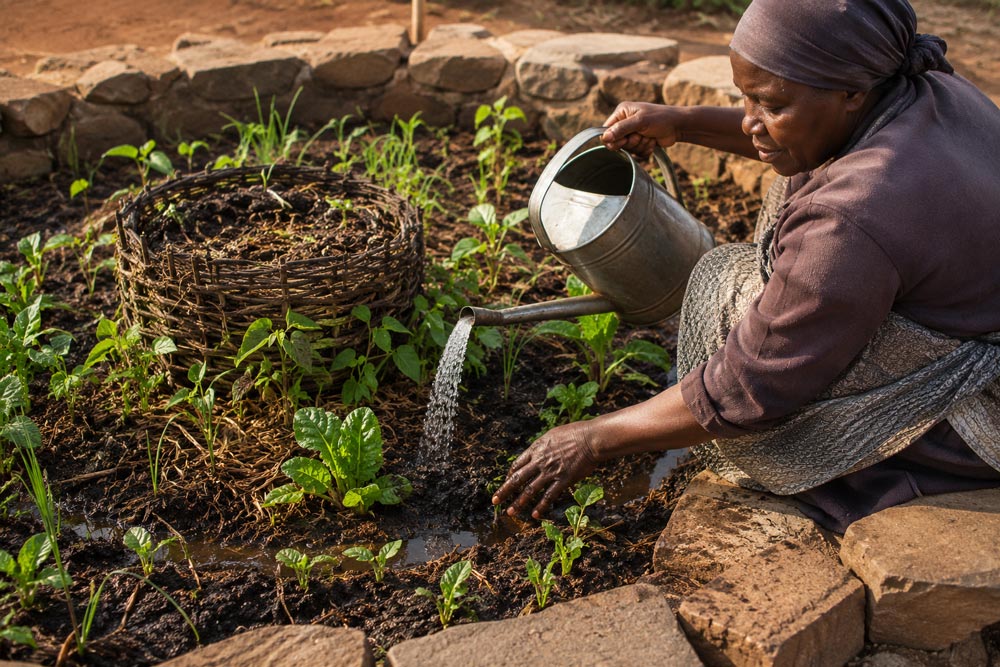
Regenerative methods and local organic materials improve the conditions food is grown in.

Slow rainfall, reduce runoff and evaporation, and use available water more carefully.

Crop rotation, companion planting and household gardening bring produce closer to home.

Insulated Eco Cook Bags keep cooking a covered pot once it has boiled, using no more fuel.
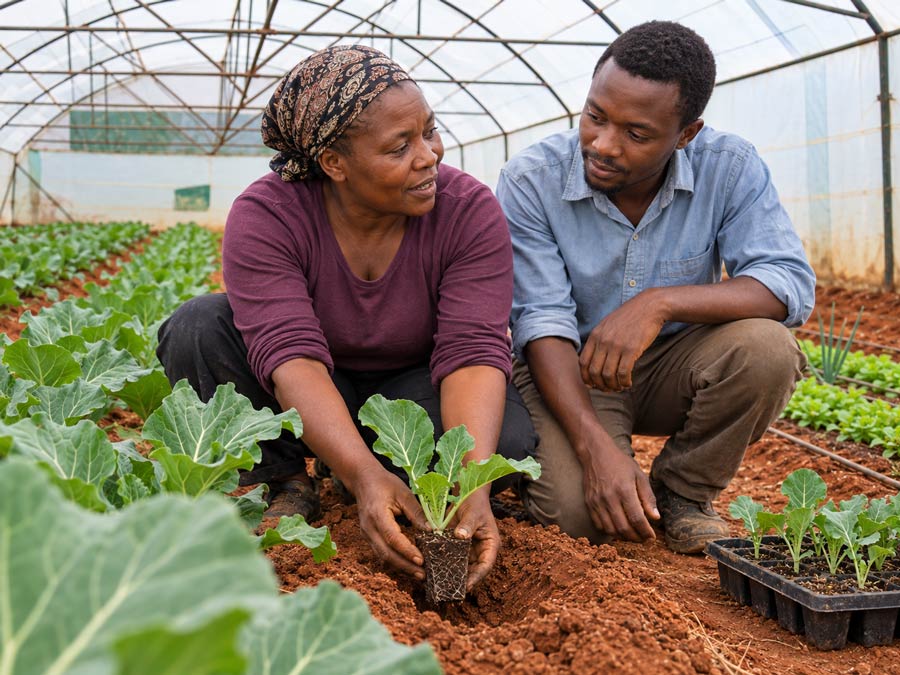
Farmers, families, schools and visitors see the methods in practice and adapt them.
Donations go straight into the soil, water, growing and cooking projects on this page — and into the hands of the communities running them.
Donate now
Much of Lesotho’s soil is under severe pressure from erosion, declining organic matter and cultivation on vulnerable land. When fertile topsoil is carried away by wind or heavy rain, growing food becomes harder.
In Malealea, the response begins with keeping the soil covered and returning organic material to it.
Unwanted invasive wattle is removed and the wood repurposed as biochar, then combined with manure and compost before being worked into the soil.
It is not a fertiliser by itself, and its effects depend on the material, the process and the soil — so we don’t claim identical results in every field.
Mulch and living cover protect soil from wind, intense sun and heavy rain, slowing evaporation and runoff while returning organic material to the ground.
Crop rotation and companion planting are demonstrated alongside, so the same nutrients are not drawn from the ground season after season.
Water is precious in a predominantly rain-fed farming system. Heavy storms can carry water rapidly across the land, taking fertile soil with them, while dry periods leave crops without enough moisture.
The methods demonstrated in Malealea are designed to slow this movement and keep more water where plants can use it.


Household growing can make fresh produce more accessible, particularly where conventional gardens are difficult to establish.
Africa’s Gift supports the use of raised beds and keyhole gardens close to people’s homes. A keyhole garden is a compact, raised growing space that can be built from locally available materials. Its design makes the planting area easier to reach and can help conserve water and organic material.
Different vegetables can be grown within a relatively small space. Where appropriate, protective netting can help shield crops from harsh sun, wind and other difficult growing conditions.
Growing nutritious ingredients is only part of the journey. Families must also have a practical way to prepare them.
An Eco Cook Bag is an insulated retained-heat cooker. A covered pot is first heated on the household’s normal stove or fire and brought to the boil. It is then placed inside the insulated bag, where the heat already in the pot continues cooking the food.
The bag does not create heat and does not completely replace a stove or fire. Its role is to reduce the length of time a pot needs active heating.
This can be particularly useful for foods such as beans and pulses that normally require long periods of simmering. It can also reduce the time someone must spend tending a fire or watching a pot.

Lasting change depends on knowledge being understood, tested and adapted locally.
The Malealea Teaching Farm is a practical place where regenerative methods can be seen in use — from soil improvement and water management to cover cropping, crop rotation and seedling production. It uses no insecticides or pesticides and is part of the international Slow Food Farms network.
Africa’s Gift is now in its 26th year of partnership with communities in the Malealea Valley. That length of relationship is the reason the work can connect soil, water, food and cooking rather than treating them separately.
It also means the approach has changed over time. Methods are tested locally, adapted, and kept only where communities find them useful — alongside the Malealea Development Trust and other local partners.
Talks with local health workers highlight the effects of prolonged exposure to smoke from open-fire cooking.
The link between South Yorkshire and the community of Malealea becomes a working partnership on the ground.
Africa’s Gift gains charitable status, and HRH Prince Seeiso of Lesotho becomes Patron.
King Letsie III visits the Teaching Farm and Eco Cook Bag project, and the farm joins the international Slow Food Farms network.
Every donation funds the soil, water, growing and cooking work in Lesotho, South Africa and Uganda — delivered by volunteers, with the communities that run each project.
A single donation, any amount.
Regular support lets projects plan ahead.
Get in touch to arrange a personal conversation about your wishes.